What Really Drives Traffic to Your Website (And Why Your Site Is Part of the Problem)
Struggling with low website traffic? Learn what actually drives traffic to a website, why your site may be working against you, and the fixes that move the needle.
This post may contain affiliate links, which means I may receive a commission, at no extra cost to you, if you make a purchase through a link. Please see my full affiliate disclosure for further information.

TL;DR Summary
Website Traffic
- Low traffic is usually a symptom of a bigger issue—your website may be working against the traffic you already have
- There are two main traffic sources: search (organic) & direct (you send people there), but most service providers underuse both
- Before chasing more traffic, fix the site so the traffic you already get actually sticks
- The Intentional Website Checklist is a free 20-point audit to help you see your site the way visitors do
The Traffic Problem Might Not Be What You Think
You’ve launched your site, put real work into your services page, and you’re proud of how it looks. But your analytics tell a different story. Visits are low, inquiries are sparse, and you’re left wondering where everyone is.
Here’s the thing most traffic advice skips: before asking how to get more people to your website, it’s worth asking whether your website is ready to receive them.
A lot of what looks like a traffic problem is actually a website problem.
Visitors are landing, but leaving immediately because the site is slow, confusing, or doesn’t clearly tell them they’re in the right place, and that directly affects your conversion rate. Traffic you’re actively sending from your email list or social profiles is leaking away because the destination isn’t working. Freebies and resources are living in Dropbox instead of on your site, which means every download you send someone is actually sending them away from you.
This post covers what actually drives traffic to a website, the hidden ways your site might be working against you, and where to focus first if you want to see real, sustainable results.
“I run my own website and contacted Liz as I was receiving various issues that needed to be addressed on my site audit. As someone new to websites and maintenance, Liz took the time to explain in detail what the issues meant and ways to rectify the situations regarding the flagged areas. I was then able to apply the knowledge learned and fix the problems on my own.
It’s one thing to have it fixed for you, but when you are given the knowledge to fix your own issues it is even better, since site maintenance is common for websites. Liz was professional, understanding, patient, and extremely helpful and it was a pleasure receiving some of her knowledge.”
The Three Main Sources of Website Traffic
For all the complexity of the traffic conversation, it really comes down to three sources. Understanding both helps you decide where to put your energy.
1. Search Traffic (Organic Traffic from Google)
Search traffic—also called organic traffic—happens when someone types a question into Google and your site appears with an answer. It’s the long game. It takes time to build, but it compounds in a way that no other traffic source does. A well-written blog post targeting the right keyword can bring in steady visitors for years after you hit publish.
For service providers, the most effective search strategy isn’t trying to rank your homepage for competitive terms. It’s writing blog posts that answer the specific questions your ideal clients are already searching for. Each post is a new entry point into your site, and over time, a library of well-structured posts builds real search authority.
2. Direct Traffic (You Send People There Yourself)
Direct traffic is every time you send someone to your site from somewhere else: an email newsletter, a social media post, a podcast mention, a guest post, or a referral. This type of traffic is more predictable and more immediately within your control than organic search.
The most reliable direct traffic sources for service providers tend to be email newsletters, collaborations like bundles and guest appearances, and word-of-mouth referrals. Social media can contribute, but its role has shifted significantly as organic reach has declined on most platforms. It works best as a pointer back to your site, not as a destination itself.
3. Paid Traffic (The Fast Lane with Ongoing Costs)
Paid traffic through search ads, social media ads, or retargeting can deliver faster visibility than organic traffic. The tradeoff is that paid advertising requires an ongoing budget, and the traffic stops the moment you stop paying. For most service providers, organic search and direct traffic offer a better long-term return, but paid traffic can be worth exploring once your site foundation is solid and you have a clear offer to promote.
Sage Grayson’s workshop Triple Your Traffic makes a point worth repeating: the goal isn’t just more traffic, it’s more of the right traffic. Reaching the people who are genuinely a fit for what you offer matters far more than raw visitor numbers. That distinction shapes which traffic strategies are actually worth your time.

Your Website Has to Be Worth Visiting
Most traffic conversations focus entirely on getting people to the site and skip the question of what happens when they arrive.
Traffic without a functional destination is like putting up a billboard for a store with no sign on the door. People pull in, look around, and leave.
Before investing more time in traffic strategies, it’s worth checking whether your site is actually set up to make the most of the visitors you already have. A few things to look at:
- Can visitors quickly tell they’re in the right place? Your homepage has seconds to communicate who you help and how. If someone lands there and has to work to figure out what you do, they’ll leave. Clarity up front is not optional.
- Is there an obvious next step? A site that informs but doesn’t guide is a missed opportunity. Every page should have a clear answer to ‘what should I do next?’ whether that’s reading another post, downloading a freebie, or booking a call.
- Do your freebies and resources live on your site? If you’re linking people to a PDF in Google Drive or a video on YouTube, you’re sending them away from your own platform. Every resource you deliver should live on a page on your website. That way, every download keeps the visitor in your world instead of redirecting them somewhere else.
- Are you linking back to your site from your own emails? Your email newsletter is one of the most reliable traffic sources you have. Every email you send is an opportunity to bring people back to your site — to a new post, a resource, an offer. If you’re not linking back regularly, you’re leaving that traffic on the table.

Common Reasons Your Traffic Isn’t Growing
If you’re putting effort into visibility but not seeing results, one of these is usually the culprit:
Your site is slow or broken on mobile
A site that takes more than a few seconds to load loses a significant portion of visitors before they even see it. A site that’s hard to navigate on a phone loses even more. Both also affect how search engines rank your site. Run a quick speed test at GTmetrix.com and pull up your site on your own phone—not just your laptop—to see what visitors are actually experiencing.
Your content isn’t connected to what people are searching for
If your blog posts are written around topics that feel relevant to you but aren’t tied to specific search phrases your ideal clients are using, they won’t show up in search results regardless of how good the writing is. The starting point for every piece of content should be a real question your ideal client is typing into Google. Tools like Google Trends can help you see what people are actually searching for as part of your content strategy.
And if you’ve been blogging for a while and wondering why your organic traffic is flat, updating existing posts with clearer structure, better keywords, and current information is often more effective than writing new ones from scratch.
You’re sending traffic away from your site instead of to it
This is one of the most common and least-noticed traffic mistakes. Attaching PDFs to emails instead of linking to a download page on your site. Sending people to YouTube instead of embedding the actual videos on your own pages. Pointing social followers to something like a LinkTree or other third-party bio page instead of creating a links page on your website. Each of these choices redirects visitors away from your platform and away from your opt-ins, your offers, and your content.
The fix is straightforward: build the habit of asking ‘where does this live on my site?’ before you share anything. If it doesn’t live on your site yet, that’s the first step.
Your homepage isn’t doing its job
Your homepage is almost always your most-visited page. If it opens with a welcome message, a general overview of your business, or a wall of information without a clear next step, you’re missing the biggest traffic leverage point you have.
A homepage that works leads with who you help and what changes for them, offers a clear path forward (usually a freebie or a service), and makes it easy for someone who’s never heard of you to immediately understand whether they’re in the right place.

What Your Website Needs Right Now
Where to Actually Start
If all of this feels like a lot, here’s a simple sequence that works for most service providers:
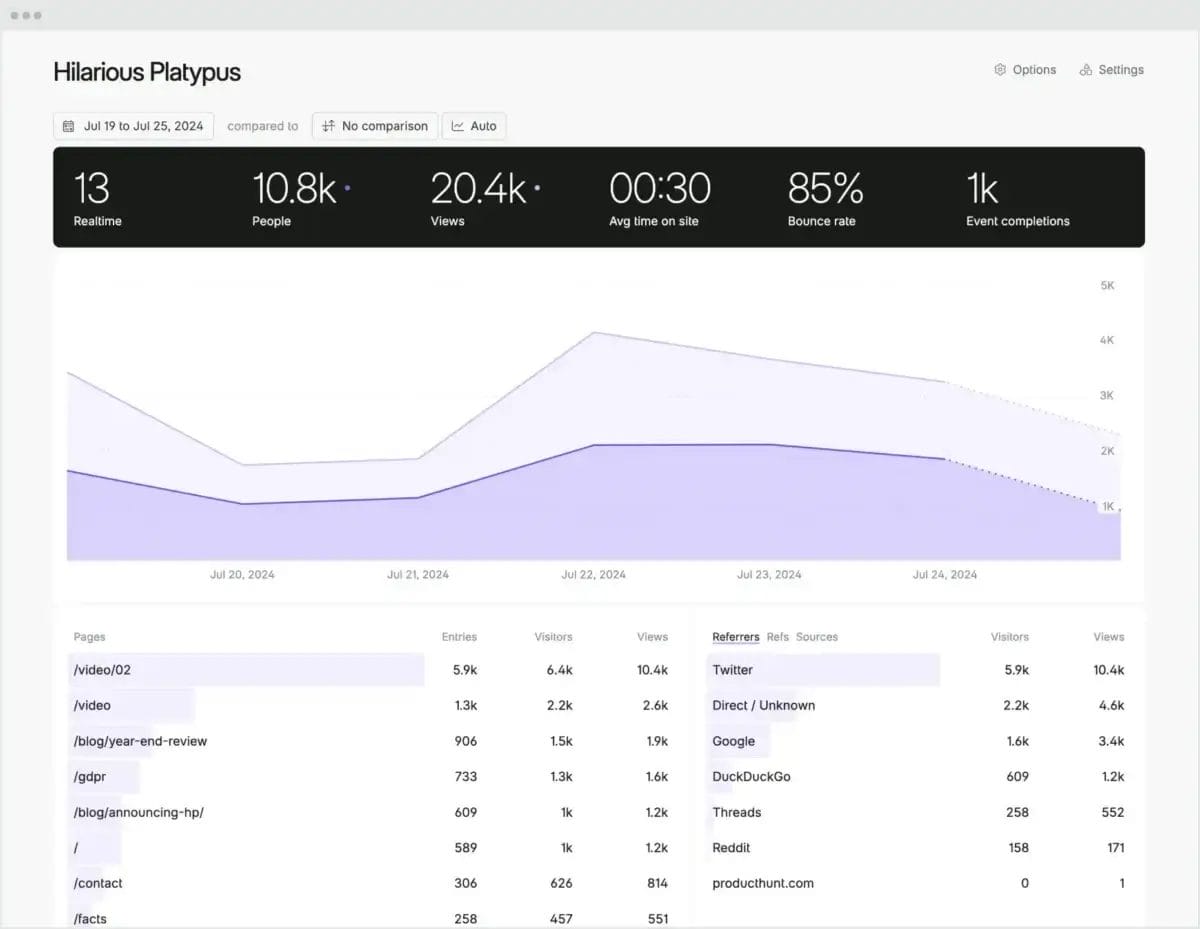
- Check your analytics first. You can’t improve what you can’t measure. Install Google Analytics or a privacy-friendly alternative like Fathom Analytics, and give it a few weeks to collect data before drawing conclusions. Look at which pages people visit, how long they stay, and where they’re coming from.
- Fix the site before chasing more traffic. If your homepage is unclear, your freebies live off-site, or your mobile experience is broken, more traffic will just mean more people bouncing. Address the foundation first.
- Start building one consistent traffic source. Pick the channel where your ideal clients already spend time and show up there consistently. For most service providers that’s either a regular email newsletter or strategic blogging, both of which bring people back to your site on your terms.
- Add internal links to connect your content. If you have existing blog posts, service pages, and resources, make sure they’re linking to each other. Internal links keep visitors moving through your site instead of leaving after one page, and they help search engines understand how your content relates to each other.
Fix one thing at a time. Steady, specific progress compounds faster than trying to overhaul everything at once.
Frequently Asked Questions
How do I get more traffic to my website without ads?
Consistent blogging around topics your ideal clients are searching for, a regular email newsletter that links back to your site, and collaborations like guest posts, bundle appearances, or podcast features are all effective non-paid traffic strategies. The common thread is showing up where your ideal clients already are and giving them a reason to visit your site.
Does blogging really help with website traffic?
Yes, and it’s one of the most durable strategies available to service providers. Each post targeting a specific search phrase is a new entry point into your site. A library of relevant, well-structured posts builds search authority over time. Updating older posts regularly is also effective: refreshed content often sees a meaningful improvement in search rankings.
How does my email list drive traffic to my website?
Every email you send is an opportunity to bring subscribers back to your site. Linking to new blog posts, updated resources, free downloads hosted on your site, and relevant service pages keeps your email list as an active traffic source. If your freebies and resources live in Dropbox or Google Drive rather than on a page on your website, you’re missing this traffic entirely.
What is a good amount of website traffic for a service-based business?
Raw traffic numbers matter less than the quality of the visitors. A service provider with 500 targeted monthly visitors who are actively looking for what she offers will outperform one with 5,000 untargeted visitors who aren’t a fit. Focus on whether your traffic is coming from sources likely to include your ideal clients, and whether those visitors are taking meaningful actions like signing up for your freebie or reading multiple pages.
Why do I have website visitors but no inquiries?
Visits without conversions usually mean either the wrong people are finding you (a traffic quality problem) or the site isn’t guiding visitors toward a next step clearly enough (a website problem). Look at which pages people are landing on, how long they’re staying, and whether there are clear opt-ins and calls to action at the right points. A Website Wellness Review often surfaces exactly where visitors are dropping off, and starting there is usually the most efficient next step.