How Writing Testimonials for Others Can Grow Your Business

TL;DR Summary
Giving Testimonials
- Writing thoughtful testimonials earns backlinks, builds brand recognition, and opens doors to collaborations and beta opportunities
- Always include your name, business name, website link, and photo when the platform allows it
- Your testimonials can become content: share screenshots in your emails, social posts, and blog to show what you actively use
- For affiliates, a published testimonial on a sales page is more persuasive than any amount of promotional copy
- Only write testimonials for things you’d genuinely recommend to a friend
This post may contain affiliate links, which means I may receive a commission, at no extra cost to you, if you make a purchase through a link. Please see my full affiliate disclosure for further information.
The Other Side of the Testimonial Equation
In my most recent post, I wrote about how testimonials add credibility to your website and why collecting social proof should be part of your web design strategy. But there’s another side to the testimonial equation that’s equally valuable: giving them. Writing testimonials strategically is something most business owners overlook entirely.
I’m that person who actually writes reviews, often without even being asked. When I love a product, course, or service, I don’t just quietly appreciate it. I tell people about it. This helps the business owner and others who are deciding whether it’s right for them.
I do this not just because I’m generous with my time but because I’ve learned that writing thoughtful testimonials is a genuinely smart business strategy.
Most business owners think about testimonials as something they need to collect. But strategically giving them can boost your SEO, expand your network, and position you as someone worth knowing in your industry.
Here’s why writing authentic reviews has become part of my business strategy, and how it can become part of yours, too.
The SEO and Visibility Benefits You Actually Get
Backlinks That Build Authority
The first time I realized one of my testimonials had generated a backlink to my website, I’ll admit I was more excited than I probably should have been. But then I started paying attention to my backlinks, and those little SEO wins began adding up.
Every time you write a testimonial that includes a link back to your website, you’re potentially earning a backlink from another business’s site. Not the spammy kind that search engines ignore but rather authentic links from real businesses, often in related industries, with context. When someone includes your testimonial on their sales page, they’re vouching for your credibility while linking to your site. Search engines notice that kind of authentic endorsement.

Brand Recognition Through Strategic Placement
When you provide a testimonial with your photo, name, and business details, you’re getting brand exposure on someone else’s platform. Your face and business name appear in front of their entire audience—people who might never have found you otherwise, including through their social media channels.
Over time, as you build a habit of reviewing products and services you genuinely love, your name starts appearing across multiple platforms in your industry. This creates a compound effect where people begin to recognize you as someone who’s actively engaged and supportive of quality work.
It’s like being known as the person who always has great restaurant recommendations. Eventually people start seeking out your opinion before they make a decision.

The Networking and Opportunity Benefits
Beta Testing and Early Access
Not long ago I received an invitation to beta test a new program from a brand I love. I can’t say for certain, but since this offer was only extended to a small number of people, I have a hunch they reached out because of a testimonial I’d left on one of their other programs. The business could see that I was able to give valuable feedback.
I honestly would have paid hundreds of dollars for the program after it launched because the topic was totally up my alley. As a beta tester, I kept access after the course launched. A win-win in every direction!
Building Genuine Business Relationships
When you write a specific, helpful testimonial, you’re starting a conversation. Business owners notice when someone takes the time to share detailed feedback. That attention often leads to deeper professional relationships.
I’ve had business owners reach out to thank me for reviews, which led to collaborations, referral partnerships, and genuine friendships. Unlike transactional relationships that start with a sales pitch, these relationships begin with me genuinely supporting their work.

Moving From Customer to Collaborator
There’s something powerful about being known as someone who actively supports other businesses in your industry. When partnership or collaboration opportunities come up, you’re more likely to come to mind if you’ve established yourself as someone who celebrates others’ success.
Businesses want to work with people who understand the value of what they’re building. Your testimonials demonstrate that understanding in a way that cold outreach never could.

What Your Website Needs Right Now
Strategies for Writing Testimonials That Actually Get Featured
My Process
I certainly don’t write testimonials for everything I buy. When something genuinely makes a difference in my business or saves me significant time, I make a point to share that experience.
My approach: focus on the specific result or transformation. Instead of ‘This course was amazing!’ I’ll mention exactly what I learned or how it changed my workflow. The more specific, the more helpful it is for potential customers and the more credible it sounds. Some platforms also accept video testimonials, which can add an extra layer of authenticity when you have the time to record one.
I also try to include context about where I was before using the product or service. This helps readers determine if they’re in a similar situation and whether the solution might work for them, too.
When I Decide to Write a Review
I typically write a testimonial when one of three things happens:
- Something saves me significant time or money (like a tool that streamlines a process I was doing manually)
- I have a particularly great experience with customer service or support
- The business owner specifically asks and I loved what they created

Taking Advantage of Review Incentives
Sometimes business owners offer incentives like store credit or discounts for helpful reviews. I take advantage of these when I genuinely love the product or service—the enthusiasm has to be real regardless of the incentive. If I wouldn’t naturally recommend something, no amount of store credit will make me write a testimonial for it.
What I Include When I Can
- My name and business name (for brand recognition)
- A link to my website (for the SEO benefit)
- My photo if they request it
- Specific details about my experience or results
- Context about my situation or business before using the product or service
Not every platform allows all of these, but I include what I can.
Turning Your Reviews Into Marketing Content
Authentic Content for Your Own Channels
Here’s something I didn’t anticipate when I started writing more testimonials: they became content for my own social media and email marketing. And now, a whole blog post.
Instead of constantly creating content about my own services, I can share discoveries that have genuinely helped my business. My audience learns about resources they might find useful, and I create content that doesn’t feel salesy or self-promotional. It practically writes itself because the enthusiasm is real.
Showing What You Actually Use
When you regularly share what tools, courses, or services you’re investing in, you’re giving your audience insight into how you run your business. This transparency builds trust in a way that polished marketing content can’t match. People want to work with someone who’s actively learning and growing.

Danbee Shin’s Website Audit Sales Page Copy Template & Website Audit Masterclass transformed the way I provide website audits. Now, instead of sending a video recording with my thoughts, we hop on a video call and talk through your site together. It’s your chance all the questions you have about improving your website. 😊
The Affiliate Marketing Angle
If you recommend products as an affiliate, there’s nothing more persuasive than sending people to a sales page with your own testimonial already on it. When potential customers see that you’re not just promoting something for the commission but actually use and love it, your recommendation carries significantly more weight.
Your testimonial on their page becomes proof that you practice what you preach. It’s the difference between saying ‘this tool is great’ and demonstrating ‘this tool is so great that the business owner featured my review on their website.’
Why Raw Screenshots Sometimes Beat Polished Graphics
I used to be hesitant about using screenshots of testimonials in my marketing. I worried they might look off-brand. After going through a mini training called Screenshot Savvy, I realized raw screenshots often feel more authentic than anything created in Canva.
And to get a little meta about it: here’s a screenshot of my testimonial on Nadine Nethery’s Screenshot Savvy sales page.
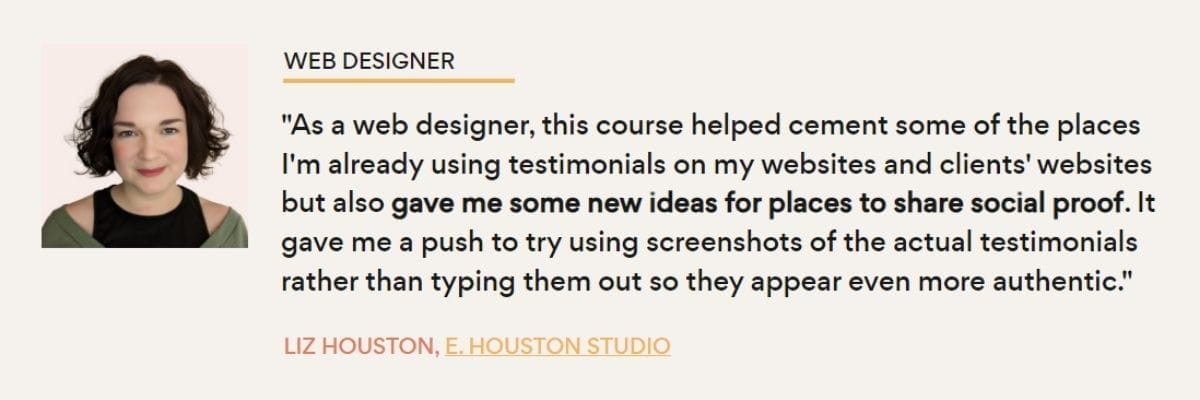
Your emails are another great place to share screenshots from testimonials you’ve given—with permission, of course. It’s social proof that works in two directions at once.

The Standards I Hold Myself To
Only What I’d Genuinely Recommend
My rule is simple: I only write testimonials for things I’d recommend to a friend. This isn’t just about maintaining authenticity (though that matters). It’s about protecting my own reputation. When someone sees my testimonial on a sales page, they’re trusting my judgment. A mediocre recommendation for the sake of being nice potentially damages that trust in ways that are hard to rebuild.
There’s also a practical legal note worth mentioning: the FTC requires that testimonials be honest and that any material connections (like affiliate relationships or free products) be disclosed clearly. Writing only for things you genuinely love takes care of the honesty requirement automatically, and the authenticity shows.
When I only share what I’m genuinely excited about, those recommendations carry more weight, and that weight compounds over time.
“I have been working with Liz for six months, and I could not have made the progress in my online business without her knowledge and assistance. She is reliable, whip-smart, conscientious, and an idea machine. Her skill base is wide and consistently expanding, which has made her an indispensable asset to me and my business.”


Supporting Small Business (Because You Are One)
As a business owner, I understand how challenging it is to gather social proof, especially early on. A thoughtful testimonial for another entrepreneur might be exactly what they need to land their next client.
The businesses I support often become my biggest cheerleaders. It’s not a calculated exchange, but there’s a natural reciprocity that happens among entrepreneurs who celebrate each other’s work.
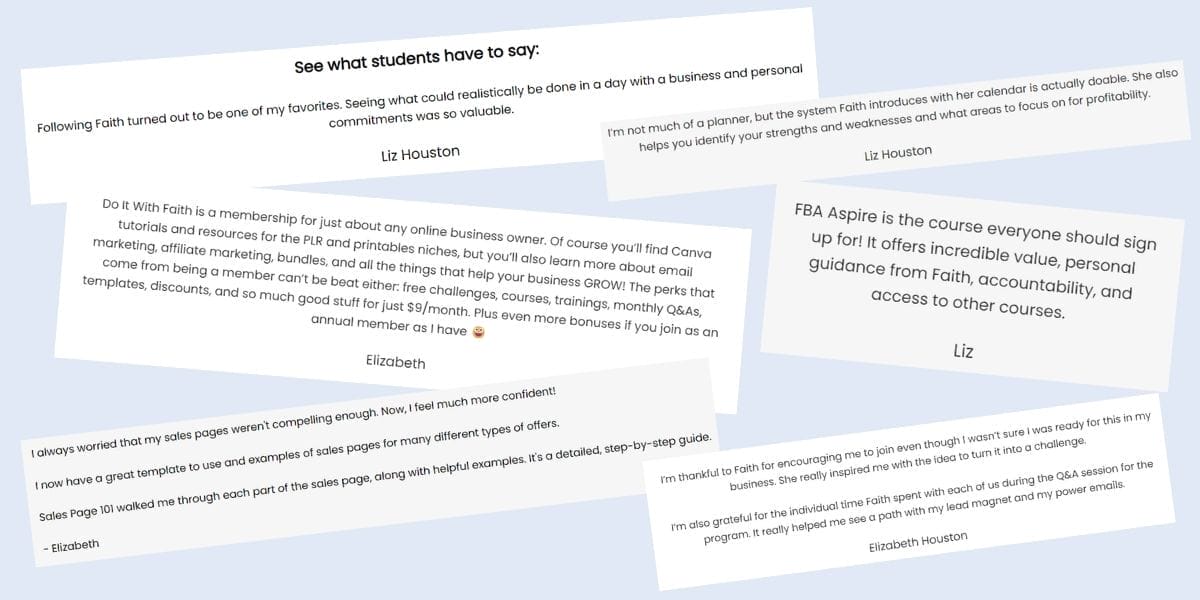
Here’s me being a fangirl of Faith Lee from Faith’s Biz Academy. Who says you can’t leave more than one testimonial if you love everything someone does?
Frequently Asked Questions
Does writing testimonials actually help with SEO?
It can, yes. When a business publishes your testimonial and includes a link to your website, that’s a genuine backlink from a real site in a related industry. These are exactly the kind of authentic links that search engines value. It’s not a major SEO strategy on its own, but it’s a real benefit that compounds over time as you build a habit of writing reviews.
What if I have mixed feelings about something. Should I still write a review?
If you have genuine reservations, the most useful thing you can do is send private feedback directly to the business owner rather than publishing a public review. Public testimonials should represent things you’d genuinely recommend. Constructive criticism is valuable, but it belongs in a private conversation where it can actually be acted on.
Are there legal considerations when writing testimonials?
The FTC requires that endorsements be truthful and that any material connection between you and the business—like an affiliate relationship, free access, or other compensation—be clearly disclosed. This applies whether you’re sharing a testimonial in your own content or it appears on someone else’s sales page.
For most business owners writing honest reviews for things they genuinely use, this isn’t complicated: just be transparent about your relationship with the product or service, and only endorse what you’d recommend regardless of compensation.
Can I use my own testimonials in my marketing?
Yes! And I think this is an underused strategy. A screenshot of your testimonial appearing on someone else’s sales page is social proof that works in two directions: it shows you actively use and endorse the tools you recommend, which is particularly valuable if you promote them as an affiliate. Share those screenshots in your emails, on social media, and anywhere else you’re showing the behind-the-scenes of how you run your business—with permission from the business owner if you’re unsure.
How do I decide what’s worth writing a testimonial for?
A simple test: would I recommend this to a friend without being asked? If yes, it’s worth a testimonial. If you’re hesitating, it’s probably not. The businesses most likely to feature your testimonial are those you’ve had a notably good experience with (e.g., a tool that saved you significant time, a course that actually changed something, a service that exceeded your expectations). Those are the reviews worth writing.
Is there a right length for a testimonial?
Long enough to be specific, short enough to be readable. Two to four sentences is usually the sweet spot. Use one sentence to establish context (who you are and why you were looking for this solution), one to describe the specific result or transformation, and one to make a clear recommendation. Anything much longer risks losing the reader; anything much shorter lacks the specificity that makes a testimonial credible.